Why Automated Yield on Solana Isn’t Free Money: A Practical Guide to Kamino’s Lending, Borrowing, and Leverage

“High APY on Solana vaults” is a tempting headline — but a more useful opening fact is this: automation amplifies operational efficiency and risk simultaneously. In practice, a platform that reduces manual rebalancing can raise realized returns by capturing transient inefficiencies, yet the same automation concentrates protocol, oracle, and liquidation exposures you must understand before committing capital. For U.S.-based DeFi users who want to move past passive staking into active lending, borrowing, and leveraged yield, Kamino on Solana offers a compact set of mechanisms — but they’re not interchangeable with simple staking or an interest-bearing account.

This explainer walks through how Kamino’s lending-style markets, vaults, and leverage workflows work, compares them with two common alternatives, and gives operational heuristics you can reuse when sizing positions and monitoring risk. It’s written for someone who already uses a Solana wallet but wants one sharper mental model of what can go wrong — and what to watch next.

Analytical diagram placeholder: represents automated vaults and lending pools, useful for thinking about flow of assets and risk

How Kamino’s Core Mechanisms Work (Mechanics, not marketing)

At its core Kamino combines three familiar DeFi primitives into an integrated interface: lending/borrowing markets, automated strategy vaults, and optional leverage. Mechanically, you deposit a supported asset into a market where other users can borrow it; the protocol aggregates supply and demand to produce a floating supply APY and borrow APR that depend on utilization and external liquidity. Vaults sit on top of that: they take deposited assets and run onchain strategies — for example, providing liquidity on DEXes, capturing lending spread, or rebalancing collateral to maintain a target leverage ratio.

Automation matters because it reduces the need for frequent user intervention: instead of manually redeploying funds to capture a yield curve or re-hedging positions across fragmented Solana liquidity venues, the vault’s rules execute rebalances and lend/borrow cycles. But that automation is a double-edged sword. The same code that collects yield also triggers market actions (borrowing, rebalancing, deleveraging) which, under stress, can cause cascading liquidations or forced trades against thin liquidity. That is not theoretical: on Solana, liquidity fragmentation and oracle update lag can magnify slippage and liquidation risk.

Where Kamino Fits Compared with Two Alternatives

To make choices clearer, compare Kamino with (A) simple lending protocols where you only supply and withdraw, and (B) manual LP-ing and leverage at separate protocols.

Option A — plain lending supply: Minimal operational overhead and typically lower protocol complexity. Trade-off: smaller upside because you do not capture arbitrage or concentrated liquidity premiums. Failure mode: prolonged rate compression and counterparty risk if the borrow side concentrates.

Option B — manual liquidity provision + separate leverage: Maximum control and potentially higher returns because you can pick timing, adjust collateral, and arbitrate between venues. Trade-off: higher gas/transaction cost, time commitment, and human error risk. Failure mode: bad timing during volatility, or failing to rebalance before a margin call.

Kamino occupies a middle ground: it automates strategies so you capture more complex yield patterns than simple supply, while delegating execution to the protocol rather than you. That reduces manual work but centralizes execution risk. If you prefer fewer clicks and an algorithmic approach, Kamino is attractive. If you prioritize absolute control or bespoke hedges, layering separate protocols remains superior.

Key Risks and Where They Come From

Understanding risk requires mapping causes to effects. Here are the principal failure modes for Kamino users and the mechanism behind each:

  • Liquidation risk from leverage: When the vault uses borrowed funds to increase exposure, price swings reduce the collateralization ratio. The vault’s auto-rebalance can mitigate this, but extreme volatility or oracle lag can still trigger liquidations.
  • Smart contract risk: Automation concentrates trust in vault code. A bug in rebalancing logic or an integration can produce outsized losses across many users.
  • Liquidity and slippage: Solana’s DEX liquidity is fragmented. Large rebalances executed during low liquidity windows can suffer severe slippage, turning a profitable reallocation into a loss.
  • Oracle and composability risk: Many onchain decisions depend on price oracles. Delays or manipulation can make automated strategies misjudge positions and trigger improper actions.

These risks are not unique to Kamino but are amplified by automation. The practical consequence: you must treat an automated vault like an active manager — read its thresholds, understand its rebalance cadence, and assume that under stress it will take the path designed in the code, not the path you would prefer.

Decision Heuristics: How to Size and Monitor a Position

Practical heuristics reduce cognitive load and make mistakes survivable. Below are repeatable rules that work in the U.S. retail context where access to analytics and fast execution matters.

  • Start small, mentally as insurance: allocate an initial stake you can afford to have illiquid or partially lost if a liquidation occurs while you learn the vault’s behavior.
  • Match horizon to strategy: choose vaults whose rebalance frequency and target exposure align with your time horizon. Short windows require active monitoring; longer windows tolerate more drift.
  • Stress-test collateral choices: simulate a 20–40% price move and check whether the vault’s liquidation path would hit you; prefer assets with deep liquidity if you plan leverage.
  • Watch utilization and borrow rates: a sudden rise in borrow APR signals stress elsewhere in the market and often precedes tighter liquidation conditions.

One Corrected Misconception

Many users treat “automation” as synonymous with “safer.” That is misleading. Automation eliminates manual execution risk but can hard-code risky responses. The correct mental model is: automation removes behavioral mistakes but concentrates protocol and algorithmic risk. In other words, automation shifts the locus of failure, it does not remove it.

If you want to explore Kamino’s interface and supported markets directly from a Solana wallet, this resource on kamino solana is a practical next step.

What to Watch Next (Signals and Near-Term Implications)

Because there is no major weekly project news to change fundamentals, the right near-term signals to monitor are external and mechanistic: (1) Solana-wide liquidity metrics — rising spreads on major DEXes indicate stress; (2) oracle update latency — longer delays increase risk of mispriced rebalances; (3) borrow APR spikes — these often precede forced deleveraging. If multiple signals move together, automated vaults that rely on onchain arbitrage and rebalancing become materially more fragile.

Longer term, the primary lever that can change the risk-return calculus is improvements in cross-venue liquidity aggregation and better oracle resilience. Those would reduce slippage and mispricing during rebalances and make automated strategies materially safer. Absent those infrastructure improvements, automation continues to be a choice about convenience versus concentrated execution risk.

FAQ

How does borrowing on Kamino differ from borrowing on a single-purpose lending market?

Borrowing inside a Kamino workflow is often paired with vault-level strategy execution. That means borrowed funds are deployed automatically for yield or liquidity provision, rather than left idle. Mechanically this increases expected yield but also links your borrow to the success of the strategy and the vault’s rebalancing logic.

Can automated vaults prevent liquidations?

No system can guarantee prevention. Vault automation can reduce the probability by rebalancing earlier than a human might, but it depends on oracle accuracy, execution timing, and available liquidity. Under extreme moves, automation may not be fast enough or may execute into adverse liquidity, so liquidation remains possible.

Which assets are safest to use with leverage on Kamino?

Safer assets are those with deep, resilient liquidity on Solana DEXes and low idiosyncratic volatility versus the collateral used. Even so, ‘safer’ is relative: leverage magnifies any price move, so choose asset/leverage combinations where a stress scenario does not cross the vault’s liquidation threshold.

How should a U.S. user think about regulatory or custody concerns?

Kamino is non-custodial: you retain control and responsibility through your Solana wallet. That reduces counterparty custody risk but does not eliminate legal or tax obligations. U.S. users should track transactions for tax reporting and be mindful that providing leverage or lending could have evolving regulatory attention.


Naatha Sangamam 2025-Oct 18, Sat-Toronto

Saturday, October 18, 2025
45 Hallcrown Pl, North York, ONu003cdivu003eM2J 4Y4u003c/divu003e
Naatha Sangamam 2025

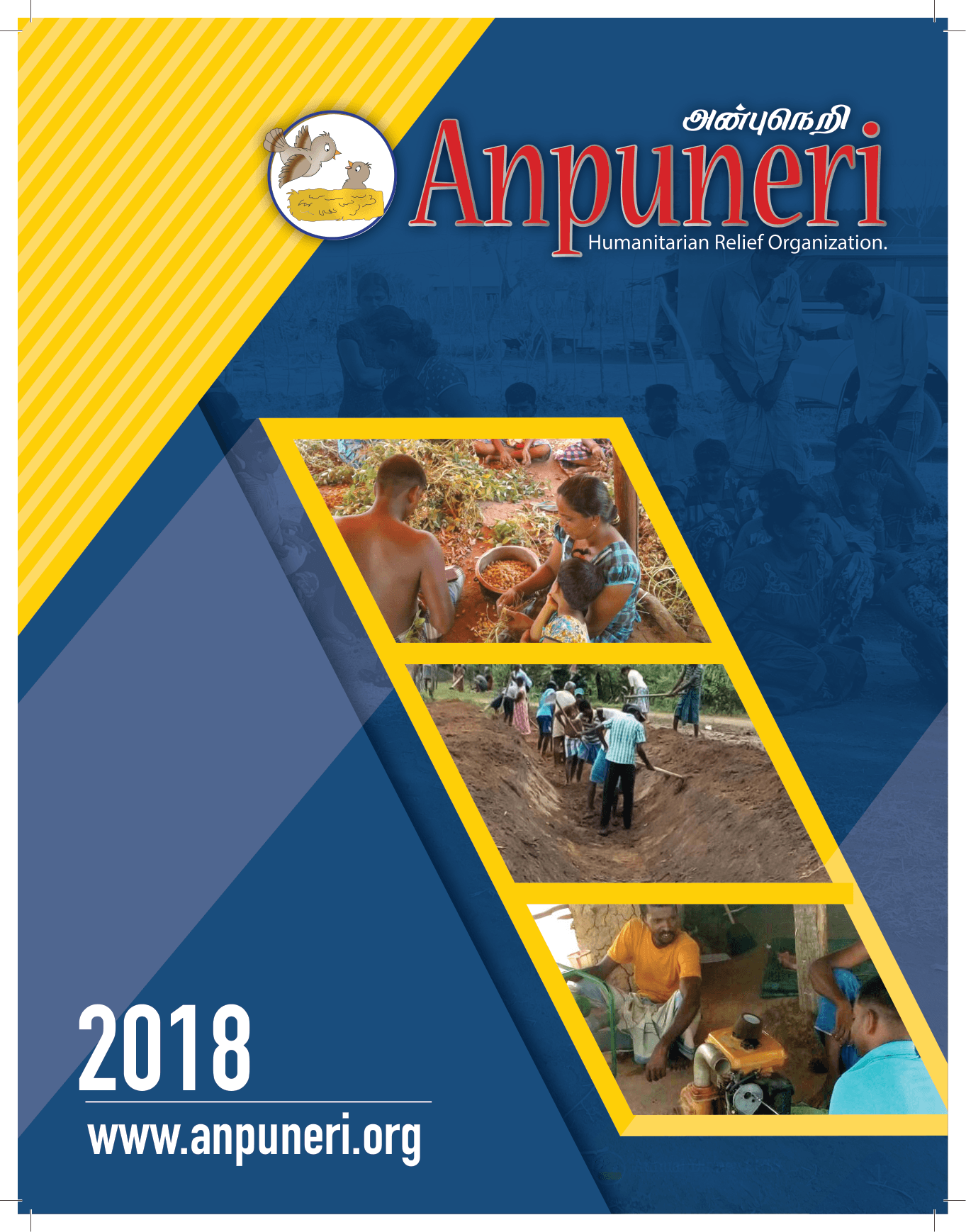
🌟 Support Anpuneri’s Humanitarian Projects! 🌟

🎶 Anpuneri – Canada
A Humanitarian Relief Organization
proudly presents

✨ Naatha Sangamam 2025 ✨
Featuring renowned Veena musician Wageshan and his celebrated band

📍 Montreal – Sunday, Oct 12
Venue: Vanier College Auditorium

📍 Toronto – Saturday, Oct 18
Venue: The Armenian Community Center

Naatha Sangamam 2025- Oct 12, Sun-Montreal

Sunday, October 12, 2025
865 Sainte Croix Ave, Montreal, QC
H4L 3Y5
Naatha Sangamam 2025

🌟 Support Anpuneri’s Humanitarian Projects! 🌟

🎶 Anpuneri – Canada
A Humanitarian Relief Organization
proudly presents

✨ Naatha Sangamam 2025 ✨
Featuring renowned Veena musician Wageshan and his celebrated band

📍 Montreal – Sunday, Oct 12
Venue: Vanier College Auditorium

📍 Toronto – Saturday, Oct 18
Venue: The Armenian Community Center

Book Gallery

“Fast” Cross‑Chain Bridges Aren’t Magic: How Relay Bridge Trades Speed for Specific Risks

A common misconception is that faster cross‑chain transfers automatically mean safer or cheaper transfers. In practice, speed, cost, security, and composability pull in different directions. This matters for U.S. users moving value between Ethereum, BSC, Polygon, Avalanche, and Huobi Eco Chain using Relay Bridge: the platform can deliver transfers in minutes, but those minutes are the product of deliberate architectural trade‑offs that change the risk surface.

This article compares how Relay Bridge’s aggregator model, parallel relay nodes, HTLCs, and fee dynamics differ from alternative approaches (atomic swaps, custodial bridges, and single‑chain pegged wrappers). My aim is practical: give you a mental model for when “fast bridging” is the right choice, what to watch for during and after a transfer, and how to manage the specific security and operational risks that remain even when transfers look instantaneous.

Diagrammatic view of a relay bridge connecting multiple blockchains, illustrating parallel relay nodes, HTLC time‑locks, and cross‑chain collateral flows

How Relay Bridge achieves speed and where that speed comes from

Mechanism first: Relay Bridge is a cross‑chain aggregator tuned for DeFi. It routes transfer requests through a network of decentralized relay nodes that process transactions in parallel and apply dynamic congestion‑aware routing algorithms. Two concrete consequences follow: typical processing times are in the 2–5 minute range, and microtransaction costs can be reduced dramatically (the platform claims up to 90% reductions versus traditional atomic swaps or custodial solutions by optimizing for current network conditions).

Those architectural choices explain the visible benefits. Parallel node processing reduces queuing delays that plague single-relay systems; aggregator routing can choose cheaper on‑chain hops or intermediate liquidity pools when one path is congested. The HTLC (Hashed Time‑Lock Contract) layer gives a predictable timeout and an automatic reversal mechanism if an expected cross‑chain swap fails to complete, which is crucial for user protection when transfers hang.

Side‑by‑side: Relay Bridge vs. Alternatives

We’ll compare three representative patterns: Relay Bridge’s aggregator model, classic atomic swaps, and custodial/centralized bridges. The comparison focuses on speed, trust assumptions, cost, and failure modes—practical dimensions for a U.S. DeFi user.

Speed: Relay Bridge (2–5 minutes) trades aggressive parallelism and routing intelligence for near‑real‑time transfer. Atomic swaps are often slower and fail more frequently when networks are congested because they require coordinated on‑chain proofs across two chains. Custodial bridges can be fastest in user experience (instant credit on the destination chain) but rely on counterparty custody.

Trust and security assumptions: Relay Bridge minimizes centralized custody by using HTLCs and decentralized relay nodes, but it still exposes users to smart contract risk and the integrity of relay nodes. Atomic swaps are trustless in the cryptographic sense but vulnerable to timing and fee mismatches. Custodial bridges introduce counterparty risk and operational risk (withdrawal freezes, mismanagement).

Cost: Relay Bridge’s dynamic routing and Gas Token Index help reduce microtransaction costs and offer dual‑yield incentives for liquidity providers, who receive actual gas tokens and native fees. Atomic swaps can be expensive because of duplicated on‑chain gas costs; custodial bridges can be cost‑efficient but often charge higher service fees. Be aware: Relay Bridge users still pay the source chain’s gas plus a bridge fee (about 0.1%–0.5%).

Security focus: where the model helps and where it still exposes you

Relay Bridge reduces some classical bottlenecks through decentralization and HTLC reversibility, but it introduces and retains several risk vectors worth understanding in detail:

- Smart contract risk: HTLCs and the bridge’s routing contracts are code; bugs or flawed upgrade paths can lock funds. The HTLC architecture ensures reversals if a transfer times out, but that protection depends on correct contract logic and timing windows.

- Relay node integrity: Parallel processing increases throughput but relies on many nodes operating correctly. Compromised or colluding nodes could delay, censor, or attempt to manipulate routing. This is not the same as custodial theft, but it is an operational attack surface.

- Underlying chain attacks: The bridge’s safety depends on the security of connected blockchains. A 51% attack or reorg on a source or destination chain can invalidate finality assumptions and create edge cases where funds might be in limbo or need manual recovery.

- Price slippage and front‑running: Aggregator routing optimizes for cheaper paths, but moving liquidity across chains can create price impact. Fast routes reduce exposure time but do not eliminate slippage risk in volatile markets.

- Token migration windows: For some projects that use the bridge for token migrations, strict deadlines exist. Tokens not migrated before those windows can become invalid, adding an exogenous risk that is not technical but procedural—users must monitor project communications carefully.

Trade‑offs explained: when Relay Bridge is a good fit

Decision heuristic (short): use Relay Bridge when you need DeFi composability across chains quickly, when cost sensitivity favors dynamic routing, and when you accept smart‑contract‑level trustless protections rather than full custodial guarantees. Avoid it for very large one‑off transfers unless you combine on‑chain monitoring and staggered transfers, or unless you accept custodial or multisig escrow alternatives for that specific counterparty risk profile.

Concrete scenarios:

- Good fit: moving collateral from Polygon to Avalanche to open a leveraged position in a market that offers a fleeting arbitrage, where time is money and the bridge’s 2–5 minute latency preserves the opportunity.

For more information, visit relay bridge official site.

- Poor fit: migrating an entire treasury or a very large token holding that would materially move markets on either chain; in such cases, bespoke OTC arrangements or staged transfers with audit trails may be safer.

Operational best practices for U.S. users

Practical checks and habits you can adopt today to reduce exposure:

- Small test transfer first. Make a small transfer to confirm routing, fees, and timing under current network conditions before committing larger sums.

- Watch token migration announcements and deadlines. If a project enforces a migration window, missing it can render assets illiquid or obsolete.

- Monitor confirmations on both source and destination chains. Don’t treat a UI “completed” as the same as finality on chain—look at block confirmations, especially on smaller networks like Huobi Eco Chain.

- Use staged transfers for large positions and consider slippage limits in the bridge UI where available.

- For liquidity providers: understand the Gas Token Index mechanics (deflationary burns + distribution of gas tokens) and the dual‑yield incentive; these are useful revenue streams but require monitoring the bridge’s fee accrual and token emission policies.

Limits, uncertainties, and what to watch next

Relay Bridge plans to expand to Solana, Polkadot, Cosmos IBC, Arbitrum, and Optimism in 2025–2026. Those integrations would materially change available liquidity and route options but also introduce new complexity: different finality models (e.g., Solana’s optimistic finality vs. Ethereum’s probabilistic finality), new attack surfaces, and the need to adapt HTLC timeouts to varied block times. Any expansion will improve composability but also create short‑term interoperability risk as connectors and relayers stabilize.

Another unknown: the operational behavior of relay nodes at scale. Parallelism is effective in reducing latency, but coordination, fair sequencing, and anti‑censorship mechanisms must be resilient. If relay node incentives shift or tokenomics change, throughput and routing decisions could shift too.

Finally, regulatory attention in the U.S. to cross‑chain liquidity and token movement could create compliance questions for bridges that facilitate high‑frequency migrations of regulated assets. Monitor policy signals and the bridge’s public attestations about KYC/AML processes if regulatory risk is a concern for your use case.

For an operational walkthrough and the bridge’s up‑to‑date network list, visit the relay bridge official site.

FAQ

Q: If a cross‑chain transfer fails, will I always get my funds back?

A: Relay Bridge uses HTLCs and a transaction reversal mechanism that returns funds automatically if a swap fails to complete within the established time window. That protection depends on correct contract execution and the finality assumptions of the source chain; extreme chain reorganizations or smart contract bugs could still complicate recovery, so small test transfers are recommended.

Q: How much will it cost to bridge assets?

A: You pay the source network’s gas fees plus a variable bridge fee generally in the 0.1%–0.5% range. Relay Bridge’s routing and Gas Token Index can materially reduce microtransaction costs compared with legacy methods, but total cost will vary with network congestion and selected route.

Q: Is Relay Bridge trustless like an atomic swap?

A: It aims to be non‑custodial through HTLCs and decentralized relays, but it is not identical to atomic swaps. Relay Bridge introduces aggregator routing and node coordination for speed and cost efficiency; these add operational complexity and a different risk profile than pure atomic swaps. Understand the trade‑offs before moving large sums.

Q: What should liquidity providers watch for?

A: LPs earn dual yields—real gas tokens and native bridge tokens—from fees, and benefit from the deflationary Gas Token Index. Watch fee accrual patterns, token emission schedules, and any governance proposals that change reward flows; those affect long‑term yield sustainability.

Donation@2024. All rights reserved

Design by WPDeveloper